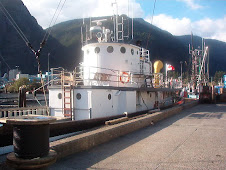
On a recent trip to Victoria, the capital city of British Columbia, we decided to include a whale watching expedition as part of our visit. We had planned it to be the highlight of our trip. But is it for everyone?
There are several reasons why it may not be for you. With large waves hitting the bow of the boat, particularly after you have left the inner harbor, anyone who is prone to seasickness may decide that this adventure is not for them.
Or if you do not have a flexible attitude, it also may not be for you. And by that I mean, if you have gone on the excursion with the idea of seeing whales and feel that anything less than that is a waste of time and money, perhaps you should not take the chance. One of my sons went and didn't see any whales; another went and saw several from a very close vantage point. I felt, therefore, that my chances were fifty-fifty and this did not seem like a bad percentage to me.
Also if you are easily or quickly bored, perhaps the trip will not be your thing either. The trip is three hours long with stopping, starting and waiting and often with not much to see in between. Particularly if this is the main purpose of your trip rather than the adventure of an afternoon on the ocean enjoying the feeling of freedom that comes from this type of experience.
On the other hand, if you love an adventure and suspect you will enjoy it whether you see whales or not, it is well worth the time and money. We found that it was a trip we wouldn't have wanted to miss in spite of not getting closer to the whales we did see. But there were many things to see and enjoy during the three hour excursion besides whales.
As we left the inner harbor, float planes lifted off not far from our boat and slowly began their climb into the clear blue sky, and fishing boats plowed through the water as they returned to the harbor. On a large outcropping of rocks near the entrance to the harbor we saw what looked like hundreds of sea lions, stretched on the rocks soaking up the afternoon sunshine. And occasionally the head of a seal popped above the surface of the water to welcome us to their ocean home before sliding quickly beneath the surface again.
As we left the shelter of the harbor, we picked up speed and headed for the open waters. The further out we went, the deeper the trough of waves became and we could hear the slap of the water beneath the hull of the boat, a steady rhythm in our ears. The sun sparkled like diamonds on the waves as they rolled towards us heading into shore. And occasionally from overhead, the sounds of seagulls greeted us.
Periodically the captain of the boat cut his engines and listened for any possible underwater sounds the whales may have been making but there were none. We did, however, eventually see some whales a little distance from us, close enough that we were able to get pictures of them. It was exciting to watch their tails and backs lift out of the water before disappearing and then repeating their performance again in a short while. We were pleased with our whale watching adventure although it is possible that those whose expectations it didn't quite meet would not have felt the same as we did.
So was it the highlight of our trip? We'd definitely do it again. And is it for everyone? Only you can decide but it certainly was for us.
Tuesday, August 31, 2010

Butchart Gardens, Victoria, British Columbia - Smelling the Flowers
On a recent trip to Victoria, B.C., we visited Butchart Gardens, an oasis of all that nature produces and then some. It is more than just smelling the flowers; it is an opportunity to dream of gardens and how we can incorporate nature into our own lives. And it is an opportunity to relax and enjoy the beauty of the many flowers, shrubs and trees that make up this garden wonderland.
We went in early August and the gardens were resplendent in all their many colors. The sunken garden, viewed from above, took our breath away with its beauty. And when we walked beside the vibrant flowers and lush lawns, a feeling of serenity and well-being settled upon us.
The Japanese garden is apparently at its best in the fall season but when we saw it in the summer with lily pads in shallow ponds and stepping stones across a stream, surrounded by lush growth and moss covered rocks, it was beautiful. There seemed very little that could be improved upon.
The rose garden also was lovely but our walk beside the dahlia's was breathtaking. Each dahlia different from it's neighbor and each more beautiful than the one before; if that was possible. The colors ranged from vibrant to muted to multi-colored with flower heads ranging from small to impossibly large on tall, narrow stalks.
A new addition to the garden is the Rose Carousel, an old-fashioned carousel featuring many animals instead of only the traditional horse. I rode an ostrich and my granddaughter beside me rode a panda bear. There was a camel, a zebra and a cat as well as other animals all having a particular significance to the Butchart family. There are also bronze sculptures, two totem poles, fountains and the Italian garden. During the summer there are fireworks and some free entertainment and in the winter there is a Christmas display.
Jennie Butchart began developing the garden in 1904 in the area of what is now known as the Japanese Gardens. When her husband had excavated the last of the limestone from their property, she had the remaining rocks rearranged and brought in topsoil to begin what has become the sunken garden. Over the years the gardens grew in popularity and by 1915 it was estimated that 18,000 people had already visited it. Over the years new gardens and exhibits have been added. Butchart Gardens is open year round for the enjoyment of the many visitors who come each season to view what it offers in the way of beauty and tranquility. It is a garden that has been passed down through the generations and continues to this day to be managed by the Butchart family.
As a nature and flower lover, it is no surprise that our visit to Butchart Gardens was, for me, a great place to go to relax where one can enjoy the flowers, beauty and nature and worries seem to be far removed.
It is not necessary to actually smell the flowers in order to appreciate their beauty and the wonder of nature and to realize that from one small seed or tuber, a living plant can burst forth in such spectacular splendor for so many to enjoy.
We went in early August and the gardens were resplendent in all their many colors. The sunken garden, viewed from above, took our breath away with its beauty. And when we walked beside the vibrant flowers and lush lawns, a feeling of serenity and well-being settled upon us.
The Japanese garden is apparently at its best in the fall season but when we saw it in the summer with lily pads in shallow ponds and stepping stones across a stream, surrounded by lush growth and moss covered rocks, it was beautiful. There seemed very little that could be improved upon.
The rose garden also was lovely but our walk beside the dahlia's was breathtaking. Each dahlia different from it's neighbor and each more beautiful than the one before; if that was possible. The colors ranged from vibrant to muted to multi-colored with flower heads ranging from small to impossibly large on tall, narrow stalks.
A new addition to the garden is the Rose Carousel, an old-fashioned carousel featuring many animals instead of only the traditional horse. I rode an ostrich and my granddaughter beside me rode a panda bear. There was a camel, a zebra and a cat as well as other animals all having a particular significance to the Butchart family. There are also bronze sculptures, two totem poles, fountains and the Italian garden. During the summer there are fireworks and some free entertainment and in the winter there is a Christmas display.
Jennie Butchart began developing the garden in 1904 in the area of what is now known as the Japanese Gardens. When her husband had excavated the last of the limestone from their property, she had the remaining rocks rearranged and brought in topsoil to begin what has become the sunken garden. Over the years the gardens grew in popularity and by 1915 it was estimated that 18,000 people had already visited it. Over the years new gardens and exhibits have been added. Butchart Gardens is open year round for the enjoyment of the many visitors who come each season to view what it offers in the way of beauty and tranquility. It is a garden that has been passed down through the generations and continues to this day to be managed by the Butchart family.
As a nature and flower lover, it is no surprise that our visit to Butchart Gardens was, for me, a great place to go to relax where one can enjoy the flowers, beauty and nature and worries seem to be far removed.
It is not necessary to actually smell the flowers in order to appreciate their beauty and the wonder of nature and to realize that from one small seed or tuber, a living plant can burst forth in such spectacular splendor for so many to enjoy.
Monday, August 30, 2010
Burns Bog - A Story To Be Told
During the 5,000 years Burns Bog has been in existence, it has meant many different things to many different people. The bog is generally recognized to be globally unique on the basis of its chemistry, rare flora and fauna, natural habitat for a large variety of wildlife and for its unusually large land mass. Located near the mouth of the Fraser River in lower British Columbia, it is the largest raised bog on the west coast of North America and is one of the largest in the world. It contributes to global biodiversity because of its storage of greenhouse gases, its importance as a nature reserve and as a wilderness area.
In the early days, the First Nations People, comprised of the Tsawwassen, the Semiahmoo, the Katzie, the Musqueam, the Squamish and the Sto:lo Nations predominately, set up temporary villages in the bog during the summer months coinciding with the salmon runs. They hunted and gathered food using many of the unique plants in the bog for much of their necessary requirements.
These plants were used for medicinal purposes such as removing corns and warts; for the treatment of skin ailments and as a medicinal drink; for ailments such as sore throats and colds, and for making tea. Many of the berries found in the bog were eaten fresh or dried into cakes and were an important source of their diet. Many of the forty species of peat moss were used for their absorbent qualities for use as feminine hygiene products, diapers and bedding.
Burns Bog is home to more than 150 species of birds, insects, the rare Mariposa butterfly and a rare dragonfly population. Black bear, blacktail deer, red fox, bobcat, coyote, beaver, muskrat, snowshoe hare and porcupine also inhabit the bog. The bog is also a habitat for many threatened and endangered species such as the Southern Red-Back Vole, a rodent thought to be extinct, various Heron, Falcon, Trumpeter Swans, Caspian Tern, Barn Owl, Painted Turtle and the Greater Sandhill Crane whose numbers are down to between 9 – 11 per year, at last count. In First Nations mythology, it is said that the Sandhill Crane “darkened the skies” with its great migratory numbers during their annual arrival to the Lower Mainland each spring. The bog is also inhabited by 22 species of raptors, 10 species of amphibians, 6 species of reptiles, 48 species of small mammals and several species of larger mammals.
As well as the diverse and rare wildlife in the bog, there are many plants that are remnants left following the retreat of ice during the last ice age. Several shrub species found in the bog are more normally found much further north. Only a few specialized plants can survive and thrive because of the particular growing conditions found within the bog. Rainwater is the main source of water and because there are few minerals or nutrients, the growth of most plants is inhibited. Much of the plant life is unique and rare including a rare moss, the ‘sphagnum fuscium’ and ericsceous plants.
To the present time, Burns Bog continues to remain an important aspect in First Nations mythology and also in terms of cultural, traditional and current uses.
During World War II Burns Bog was controlled by the United States Army in order to use the peat moss to refine magnesium to be used for artillery shells. However, it never was used for that purpose. Also, between the 1930’s and 1984 a thriving business was conducted in the harvest of peat moss. This business threatened the many beautiful and rare plants within the bog.
Over the years Burns Bog has been threatened with many development proposals such as a deep-sea port, housing for 100,000 people, a world-class thorough-bred race track and an amusement park. The outside edges of the bog have already been disturbed with a landfill site, drainage ditches and adjacent blueberry farms. Even assuming there was no further disturbance to the bog, the damaged portion, due to its slow growth, would take 50 – 100 years to renew its self.
As well as farming and other development slowly eating away some areas of the bog, the intrusion of non-native plants such as scotch broom and blackberry bushes are becoming problematic as they intrude on this unique area. Visitors, walking on other than designated trails, have also impacted the environment of the bog.
Burns Bog’s history has been as diverse as the opinions abounding concerning its future. It’s been a future that at many times has been uncertain and as a result development and destruction have occurred. Many organizations, like The Burns Bog Conservation Society, as well as many private citizens, are bitterly opposed to development of the bog.
The Burns Bog Conservation Society, officially established in 1988, has focused its efforts on protecting the bog, fighting further development in order to preserve the ecological integrity and viability of Burns Bog.
The bog has international importance, known world-wide by environmentalists. It acts as a carbon sink trapping greenhouse gases such as carbon dioxide and methane, which if released, would be a huge contributor to global warming.
During decomposition, as would happen with development, greenhouse gases would be released. Therefore, many feel that it is important to keep the bog intact to assist in slowing the acceleration of global warming. It is important to preserve and enhance the vital ecological functions of the bog as living organisms in Burns Bog act together to produce a self-sustaining ecosystem. Bogs are also important for the fact that they filter the air and water, release oxygen, soak up potential flood waters and release nutrients into the river for the fish.
It is each of our responsibility to protect the bog and other areas like it to ensure that there is a continued habitat for the many endangered species and animals that have found refuge in the bog, as well as the rare bird life, to ensure that we continue to have nature reserves and wilderness areas. Civilization should not be allowed to intrude on an area that offers so much to our community.
On March 24, 2004, the Government of British Columbia purchased 5,000 acres of Burns Bog. But the need to protect Burns Bog is still far from over.
Several major blazes have threatened the future of Burns Bog. Because of the methane and rich peat, a fire can burn for months in the bog. In 1996 Vancouver was covered in smoke and ash for two days, destroying 170 hectares and costing more than $200,000 to extinguish. With each fire there has been substantial damage to the bog. It will require many years to renew itself.
Plants, such as the Drosera Rotundifolian plant, a small carnivorous perennial, were used for medicinal purposes, such as removing corns and warts. It was also used as a good luck charm for fishing. The Kalmia Micophylla Occidentalis plant was used for treatment of skin ailments and as a medicinal drink, sometimes causing dizziness and cramps. The dried leaves of the Rhododendron Groenlandicum plant were used to make a tea. It was used for such ailments as sore throats and colds. The twisted roots of the Pinus Contorta plant were used to make ropes and the bark was used for medicinal purposes. The stem of the Spirea Douglasii plant was used for collecting marine shells which were traded with other groups or used as currency. Many of the forty species of peat moss (sphagnum) were used for their absorbent qualities as feminine hygiene products, diapers and bedding. Much of the edible berries were harvested and dried to add to their winter food supply The berries from the Vaccinium Oxycoccus plant were cooked and served in oolichan grease, eaten fresh or stored in moss. The berries from the Vaccinium Uliginosum plant were eaten fresh or dried into cakes. These berries were an important source of their diet as was the Rubus Chamaemorus plant, which was a staple food.
The Haida, Nisgas and Tsimshim bands also occasionally used some of the plants within the bog but were not part of the predominant First Nations People who made the bog their home.
In the early days, the First Nations People, comprised of the Tsawwassen, the Semiahmoo, the Katzie, the Musqueam, the Squamish and the Sto:lo Nations predominately, set up temporary villages in the bog during the summer months coinciding with the salmon runs. They hunted and gathered food using many of the unique plants in the bog for much of their necessary requirements.
These plants were used for medicinal purposes such as removing corns and warts; for the treatment of skin ailments and as a medicinal drink; for ailments such as sore throats and colds, and for making tea. Many of the berries found in the bog were eaten fresh or dried into cakes and were an important source of their diet. Many of the forty species of peat moss were used for their absorbent qualities for use as feminine hygiene products, diapers and bedding.
Burns Bog is home to more than 150 species of birds, insects, the rare Mariposa butterfly and a rare dragonfly population. Black bear, blacktail deer, red fox, bobcat, coyote, beaver, muskrat, snowshoe hare and porcupine also inhabit the bog. The bog is also a habitat for many threatened and endangered species such as the Southern Red-Back Vole, a rodent thought to be extinct, various Heron, Falcon, Trumpeter Swans, Caspian Tern, Barn Owl, Painted Turtle and the Greater Sandhill Crane whose numbers are down to between 9 – 11 per year, at last count. In First Nations mythology, it is said that the Sandhill Crane “darkened the skies” with its great migratory numbers during their annual arrival to the Lower Mainland each spring. The bog is also inhabited by 22 species of raptors, 10 species of amphibians, 6 species of reptiles, 48 species of small mammals and several species of larger mammals.
As well as the diverse and rare wildlife in the bog, there are many plants that are remnants left following the retreat of ice during the last ice age. Several shrub species found in the bog are more normally found much further north. Only a few specialized plants can survive and thrive because of the particular growing conditions found within the bog. Rainwater is the main source of water and because there are few minerals or nutrients, the growth of most plants is inhibited. Much of the plant life is unique and rare including a rare moss, the ‘sphagnum fuscium’ and ericsceous plants.
To the present time, Burns Bog continues to remain an important aspect in First Nations mythology and also in terms of cultural, traditional and current uses.
During World War II Burns Bog was controlled by the United States Army in order to use the peat moss to refine magnesium to be used for artillery shells. However, it never was used for that purpose. Also, between the 1930’s and 1984 a thriving business was conducted in the harvest of peat moss. This business threatened the many beautiful and rare plants within the bog.
Over the years Burns Bog has been threatened with many development proposals such as a deep-sea port, housing for 100,000 people, a world-class thorough-bred race track and an amusement park. The outside edges of the bog have already been disturbed with a landfill site, drainage ditches and adjacent blueberry farms. Even assuming there was no further disturbance to the bog, the damaged portion, due to its slow growth, would take 50 – 100 years to renew its self.
As well as farming and other development slowly eating away some areas of the bog, the intrusion of non-native plants such as scotch broom and blackberry bushes are becoming problematic as they intrude on this unique area. Visitors, walking on other than designated trails, have also impacted the environment of the bog.
Burns Bog’s history has been as diverse as the opinions abounding concerning its future. It’s been a future that at many times has been uncertain and as a result development and destruction have occurred. Many organizations, like The Burns Bog Conservation Society, as well as many private citizens, are bitterly opposed to development of the bog.
The Burns Bog Conservation Society, officially established in 1988, has focused its efforts on protecting the bog, fighting further development in order to preserve the ecological integrity and viability of Burns Bog.
The bog has international importance, known world-wide by environmentalists. It acts as a carbon sink trapping greenhouse gases such as carbon dioxide and methane, which if released, would be a huge contributor to global warming.
During decomposition, as would happen with development, greenhouse gases would be released. Therefore, many feel that it is important to keep the bog intact to assist in slowing the acceleration of global warming. It is important to preserve and enhance the vital ecological functions of the bog as living organisms in Burns Bog act together to produce a self-sustaining ecosystem. Bogs are also important for the fact that they filter the air and water, release oxygen, soak up potential flood waters and release nutrients into the river for the fish.
It is each of our responsibility to protect the bog and other areas like it to ensure that there is a continued habitat for the many endangered species and animals that have found refuge in the bog, as well as the rare bird life, to ensure that we continue to have nature reserves and wilderness areas. Civilization should not be allowed to intrude on an area that offers so much to our community.
On March 24, 2004, the Government of British Columbia purchased 5,000 acres of Burns Bog. But the need to protect Burns Bog is still far from over.
Several major blazes have threatened the future of Burns Bog. Because of the methane and rich peat, a fire can burn for months in the bog. In 1996 Vancouver was covered in smoke and ash for two days, destroying 170 hectares and costing more than $200,000 to extinguish. With each fire there has been substantial damage to the bog. It will require many years to renew itself.
Plants, such as the Drosera Rotundifolian plant, a small carnivorous perennial, were used for medicinal purposes, such as removing corns and warts. It was also used as a good luck charm for fishing. The Kalmia Micophylla Occidentalis plant was used for treatment of skin ailments and as a medicinal drink, sometimes causing dizziness and cramps. The dried leaves of the Rhododendron Groenlandicum plant were used to make a tea. It was used for such ailments as sore throats and colds. The twisted roots of the Pinus Contorta plant were used to make ropes and the bark was used for medicinal purposes. The stem of the Spirea Douglasii plant was used for collecting marine shells which were traded with other groups or used as currency. Many of the forty species of peat moss (sphagnum) were used for their absorbent qualities as feminine hygiene products, diapers and bedding. Much of the edible berries were harvested and dried to add to their winter food supply The berries from the Vaccinium Oxycoccus plant were cooked and served in oolichan grease, eaten fresh or stored in moss. The berries from the Vaccinium Uliginosum plant were eaten fresh or dried into cakes. These berries were an important source of their diet as was the Rubus Chamaemorus plant, which was a staple food.
The Haida, Nisgas and Tsimshim bands also occasionally used some of the plants within the bog but were not part of the predominant First Nations People who made the bog their home.
The Devastation of Forest Fires - The Good, Bad and the Ugly
According to statistics, 58% of forest fires are caused by the carelessness of humans and the remaining fires are started by lightning strikes. Most would agree that forest fires are devastating and dangerous to communities and those whose job it is to fight these fires. But do forest fires also contribute to a sustainable ecosystem?
Due to mild winters the mountain pine beetle, which would normally die off in extremely cold conditions, are thriving in our forests and have become one of the biggest contributors to our forest fire conditions. They have infected and killed more than ten million acres of trees within B.C. alone. The dead tinder-dry trees left in their wake, when added to dried underbrush and pine needles on the forest floor, act as fuel when lightning strikes.
However, in spite of the devastation caused and the economic cost, forest fires are a natural phenomenon and will continue to happen. Researchers say they play an important role by returning valuable nutrients to the soil. Fire is a natural part of a healthy forest ecosystem assisting in the reduction of the build-up of dead and decaying leaves, logs and needles that accumulate. It also reduces the forest canopy and allows sunlight to stimulate new growth from seeds.
Some trees such as the lodgepole pine and jack pine have evolved because of nature’s fires. During the intense heat from these blazes the cones open and release their seeds onto the forest floor, which has been made rich in nutrients by the ash left behind. Within months of a fire, the forest has already begun its rejuvenation process with new seeds taking root in an area that is now clear of debris.
For this reason, in places such as Banff National Park and the forest areas around Windsor and Toronto, “prescribed” and “controlled” fires are set. Although it is a common practice, it is also considerably controversial. Timber in British Columbia is considered a highly valuable resource and burning down trees does not make sense to a lot of people.
Canada’s Aboriginal people used these “controlled” fires to clear grasslands as did the early settlers to clear their homesteads. Some farmers still use this practice to renew the growth of grass for their livestock. “Prescribed” fires are considered to be one way to prevent future and more devastating fires.
The cost of forest fires is horrendous both economically and emotionally. It is estimated that approximately two million per day is spent on firefighting. And often people lose not only their homes and possessions, but their jobs as well.
During British Columbia's devastating fire season of 2003 and 2004, lessons were learned and people began to take precautions. A fishing lodge which was in the path of the Lonesome Lake fire, was spared because the owners set up sprinkler systems. However, a 100-year-old pioneer homestead in British Columbia was not so fortunate as their sprinkler system was set up too late to save the old family homestead.
Another tragic loss during this particularly bad fire season, were sixteen of the eighteen formerly restored trestles of the historic Kettle Valley Railway in the Myra Canyon area of the Okanagan. The railway spans some of the most challenging mountainous terrain in British Columbia and made fighting the fire extremely dangerous and treacherous.
Firefighters, some professional but many with little training, deal with monumental difficulties. In our mountainous British Columbian terrain, it is often difficult for those firefighters fighting on the ground. While helicopters and water tankers are used to contain fires by dropping retardants, it is the men on the ground who really put out the fires.
Visibility is also a major problem for firefighters and pilots due to smoke lying over the fire making it difficult for helicopters to get in and out to deploy the crews. It also places parachuting firefighters into extremely dangerous positions.
Firefighters also have to deal with adverse weather conditions created by the burning fire where the air around the fire heats and rises pulling in surrounding air and a wind pattern emerges from the cycle. “Flame lanes” will often be 400 feet above the trees taking huge chunks of trees and throwing them hundreds of feet.
As more and more people move outside the larger populated areas and live nearer to our forests, there is an increased risk of human-related fires and of people losing their homes because of their proximity to the forests.
For those living close to forested areas, some practical suggestions for protecting their families and homes include: that buildings be made of fire-resistant materials such as metal, slate, tile, asphalt shingles and non-combustible siding and that homeowners have a 10 meter zone of green grass around their buildings and a further 20 meters of fire resistant plants such as broad-leaf deciduous trees, low shrubs and ferns. They also suggest that people clear away twigs, debris and other combustibles from their property.
Tinder-dry forests, unrelenting hot weather, winds, careless humans or lightning strikes every year threaten people, property and our forests. Prevention is the first line of defense. Fire prevention becomes everyone’s responsibility.
Due to mild winters the mountain pine beetle, which would normally die off in extremely cold conditions, are thriving in our forests and have become one of the biggest contributors to our forest fire conditions. They have infected and killed more than ten million acres of trees within B.C. alone. The dead tinder-dry trees left in their wake, when added to dried underbrush and pine needles on the forest floor, act as fuel when lightning strikes.
However, in spite of the devastation caused and the economic cost, forest fires are a natural phenomenon and will continue to happen. Researchers say they play an important role by returning valuable nutrients to the soil. Fire is a natural part of a healthy forest ecosystem assisting in the reduction of the build-up of dead and decaying leaves, logs and needles that accumulate. It also reduces the forest canopy and allows sunlight to stimulate new growth from seeds.
Some trees such as the lodgepole pine and jack pine have evolved because of nature’s fires. During the intense heat from these blazes the cones open and release their seeds onto the forest floor, which has been made rich in nutrients by the ash left behind. Within months of a fire, the forest has already begun its rejuvenation process with new seeds taking root in an area that is now clear of debris.
For this reason, in places such as Banff National Park and the forest areas around Windsor and Toronto, “prescribed” and “controlled” fires are set. Although it is a common practice, it is also considerably controversial. Timber in British Columbia is considered a highly valuable resource and burning down trees does not make sense to a lot of people.
Canada’s Aboriginal people used these “controlled” fires to clear grasslands as did the early settlers to clear their homesteads. Some farmers still use this practice to renew the growth of grass for their livestock. “Prescribed” fires are considered to be one way to prevent future and more devastating fires.
The cost of forest fires is horrendous both economically and emotionally. It is estimated that approximately two million per day is spent on firefighting. And often people lose not only their homes and possessions, but their jobs as well.
During British Columbia's devastating fire season of 2003 and 2004, lessons were learned and people began to take precautions. A fishing lodge which was in the path of the Lonesome Lake fire, was spared because the owners set up sprinkler systems. However, a 100-year-old pioneer homestead in British Columbia was not so fortunate as their sprinkler system was set up too late to save the old family homestead.
Another tragic loss during this particularly bad fire season, were sixteen of the eighteen formerly restored trestles of the historic Kettle Valley Railway in the Myra Canyon area of the Okanagan. The railway spans some of the most challenging mountainous terrain in British Columbia and made fighting the fire extremely dangerous and treacherous.
Firefighters, some professional but many with little training, deal with monumental difficulties. In our mountainous British Columbian terrain, it is often difficult for those firefighters fighting on the ground. While helicopters and water tankers are used to contain fires by dropping retardants, it is the men on the ground who really put out the fires.
Visibility is also a major problem for firefighters and pilots due to smoke lying over the fire making it difficult for helicopters to get in and out to deploy the crews. It also places parachuting firefighters into extremely dangerous positions.
Firefighters also have to deal with adverse weather conditions created by the burning fire where the air around the fire heats and rises pulling in surrounding air and a wind pattern emerges from the cycle. “Flame lanes” will often be 400 feet above the trees taking huge chunks of trees and throwing them hundreds of feet.
As more and more people move outside the larger populated areas and live nearer to our forests, there is an increased risk of human-related fires and of people losing their homes because of their proximity to the forests.
For those living close to forested areas, some practical suggestions for protecting their families and homes include: that buildings be made of fire-resistant materials such as metal, slate, tile, asphalt shingles and non-combustible siding and that homeowners have a 10 meter zone of green grass around their buildings and a further 20 meters of fire resistant plants such as broad-leaf deciduous trees, low shrubs and ferns. They also suggest that people clear away twigs, debris and other combustibles from their property.
Tinder-dry forests, unrelenting hot weather, winds, careless humans or lightning strikes every year threaten people, property and our forests. Prevention is the first line of defense. Fire prevention becomes everyone’s responsibility.
Sunday, August 29, 2010
The World of Only Children
The trend towards one-child families seems to have created some controversy over the pros and cons of raising an only child. There are many reasons for having an only child and there are many opinions about the consequences of raising an only child.
Many couples choose to have only one child because they begin their child rearing later in life, preferring to purchase a home and establish themselves in their careers first. Other couples may base their decision on the cost of raising a child to adulthood. The latest statistics indicate that it costs a minimum of $160,000 to raise a child to the age of eighteen.
Some believe that the negatives of raising an only child are that they may tend to be more aggressive, bossy, spoiled, selfish, and dependent on their parents and other adults in their lives. Only children, others feel, appear to mature more quickly than children with siblings.
A professor at Rutgers University in New Jersey believes these are social stereotypes dating back to the 1890’s and has no basis in fact. She believes that parenting styles will have more of an influence on how an only child, or any child, will turn out.
Some of the questions asked by proponents of larger families are:
- Do only children grow up with a different attitude and view of the world and perhaps for this reason may be more self-centered?
- Do children with siblings have better interpersonal skills?
In an article written in the Canadian Journal of Psychiatry, a study was conducted indicating that there are no marked differences in personality traits in only children than in those with siblings.
The study’s conclusion was that the biggest predictor of differences between children, whether from one child families or those with siblings, was the parental caregiver’s child-rearing attitudes, i.e.: if the parent did not exhibit significant impatience, rejection, stubbornness, neglect or over protectiveness, there would likely be few disorders of anxiety or dependency, etc. They did note however that parents of only children are generally more likely to be overprotective.
Other questions relating to only children are:
- Do they receive more attention than those who have several siblings and can this be a potential problem?
- Do only children have more opportunities academically and materially than children in larger families?
- Do only children spend more time with adults than those who have siblings resulting in children who are more mature for their ages? And could this potentially rob young children of being children?
- Are only children more spoiled and catered to or are they actually more consistently disciplined?
When speaking with adult only children, they felt that some of the advantages to being an only child were that they definitely had more attention from parents although as one person admitted, this can be a good thing or a bad thing. Only children also felt they had freedom from sibling rivalry and comparisons made to their siblings. Studies show that there is usually greater financial benefits to the only child.
One adult only child said the drawbacks were that he had no one to share the blame with, no older siblings to help him with his homework, no younger sibling to show things to, no older sibling to protect him from bullies and no sibling role models. Another problem was that as parents age, there is no sibling support. He feels that being an only child was often lonely while he was young but is also lonely as an adult when there is no sibling to discuss health problems of an aging parent with.
Another adult only child said that as a child she loved going to friends’ homes where there were other children because she loved the noise, laughter and busyness of a home with several children. She also was very shy as a child because of less interaction with other children so loneliness was an issue. She also resented that as a child and youth she was expected to attend adult occasions with her parents.
Another adult only child said she never felt the need for a sibling because she had always had lots of friends as she was growing up. She said because she was an only child she became completely reliant on herself for her own happiness.
Studies show that only children may have a slight edge regarding intelligence, assuming there is an enriched intellectual home environment. They may also have an edge on abilities to achieve assuming that their environment is one of high expectations with encouragement and motivation to achieve.
Some well-known celebrities who were only children who have accomplished great achievements are Tiger Woods, Robin Williams and John Lennon. But there are many successful people who come from families with siblings.
The answers to questions regarding only children are difficult to determine, if ever we do because of the many variables involved when parenting children whether as only children or in multiple sibling families. It is even more difficult when only children have as many diverse opinions on the pros and cons of being an only child. But those who have chosen to have one child families appear to be happy with their decision.
Many couples choose to have only one child because they begin their child rearing later in life, preferring to purchase a home and establish themselves in their careers first. Other couples may base their decision on the cost of raising a child to adulthood. The latest statistics indicate that it costs a minimum of $160,000 to raise a child to the age of eighteen.
Some believe that the negatives of raising an only child are that they may tend to be more aggressive, bossy, spoiled, selfish, and dependent on their parents and other adults in their lives. Only children, others feel, appear to mature more quickly than children with siblings.
A professor at Rutgers University in New Jersey believes these are social stereotypes dating back to the 1890’s and has no basis in fact. She believes that parenting styles will have more of an influence on how an only child, or any child, will turn out.
Some of the questions asked by proponents of larger families are:
- Do only children grow up with a different attitude and view of the world and perhaps for this reason may be more self-centered?
- Do children with siblings have better interpersonal skills?
In an article written in the Canadian Journal of Psychiatry, a study was conducted indicating that there are no marked differences in personality traits in only children than in those with siblings.
The study’s conclusion was that the biggest predictor of differences between children, whether from one child families or those with siblings, was the parental caregiver’s child-rearing attitudes, i.e.: if the parent did not exhibit significant impatience, rejection, stubbornness, neglect or over protectiveness, there would likely be few disorders of anxiety or dependency, etc. They did note however that parents of only children are generally more likely to be overprotective.
Other questions relating to only children are:
- Do they receive more attention than those who have several siblings and can this be a potential problem?
- Do only children have more opportunities academically and materially than children in larger families?
- Do only children spend more time with adults than those who have siblings resulting in children who are more mature for their ages? And could this potentially rob young children of being children?
- Are only children more spoiled and catered to or are they actually more consistently disciplined?
When speaking with adult only children, they felt that some of the advantages to being an only child were that they definitely had more attention from parents although as one person admitted, this can be a good thing or a bad thing. Only children also felt they had freedom from sibling rivalry and comparisons made to their siblings. Studies show that there is usually greater financial benefits to the only child.
One adult only child said the drawbacks were that he had no one to share the blame with, no older siblings to help him with his homework, no younger sibling to show things to, no older sibling to protect him from bullies and no sibling role models. Another problem was that as parents age, there is no sibling support. He feels that being an only child was often lonely while he was young but is also lonely as an adult when there is no sibling to discuss health problems of an aging parent with.
Another adult only child said that as a child she loved going to friends’ homes where there were other children because she loved the noise, laughter and busyness of a home with several children. She also was very shy as a child because of less interaction with other children so loneliness was an issue. She also resented that as a child and youth she was expected to attend adult occasions with her parents.
Another adult only child said she never felt the need for a sibling because she had always had lots of friends as she was growing up. She said because she was an only child she became completely reliant on herself for her own happiness.
Studies show that only children may have a slight edge regarding intelligence, assuming there is an enriched intellectual home environment. They may also have an edge on abilities to achieve assuming that their environment is one of high expectations with encouragement and motivation to achieve.
Some well-known celebrities who were only children who have accomplished great achievements are Tiger Woods, Robin Williams and John Lennon. But there are many successful people who come from families with siblings.
The answers to questions regarding only children are difficult to determine, if ever we do because of the many variables involved when parenting children whether as only children or in multiple sibling families. It is even more difficult when only children have as many diverse opinions on the pros and cons of being an only child. But those who have chosen to have one child families appear to be happy with their decision.
Adult Step-Children - Are They a Thorny Issue in a Second Marriage?
Many second marriages crumble as a result of issues surrounding step-children. With young children who are living in the home, the problem is easier to understand. But what of problems created by adult step-children who are not living in the home?
Issues such as jealousies may arise if adult children feel their wishes or, in some cases demands, are now only considered in view of the new family structure and do not have the same significance as they did before their parent had married again.
Also adult children are very often upset with the idea that the new person in their biological parent's life will not only have a claim on their time but also may have some financial claims as well which could well leave them with substantially less of the pot.
And in some cases, the adult children may feel that the new person in their parent's life is usurping their biological parent's place. They may also feel that this person doesn't measure up in some way and be resentful of the new person in their mothers or father's life.
The following are some basic suggestions to bear in mind which can help in relationships with adult step-children:
Be a good listener to your step-children whether they are young or are adults;
Don't try to be a parent to them whatever their age but particularly when they're adults, try to be a friend only;
When trying to establish relationships, go slowly;
Attempt to have good communication;
Be interested in them and in their interests;
Don't try to be a grandparent to the offspring of your adult step-children;
Encourage your spouse to maintain a relationship with his/her children;
Avoid doing anything that makes step-children, young or adult, feel threatened by you.
But what if there had been very little relationship between the biological parent and his or her children before you came on the scene? But in spite of this there is still resentment of the new person in their parent's life; what can you do as the new person?
It is still advisable to encourage your spouse to be as interactive as possible with his/her children. However, do not try to influence the children or encourage anything that is out of their comfort zone; it is not up to you and will only be viewed on their part as interference.
I read once that if a child is seven years old when a step-parent enters their life, it will take seven years for them to accept and consider the new person to be a permanent part of their existence. So it is easy to understand how much more difficult it is when the step-children are adults. And this is particularly the case if there already exists a poor relationship between the biological parent and his/her adult children.
There are varying statistics for failures of second marriages but it is suggested that a second marriage is less likely to survive than a first. One report suggests that only 20% of second marriages succeed because of the many problems and pitfalls associated with second or subsequent marriages. Step-children are considered high on the list of difficulties that are encountered.
In order for a second marriage to survive, particularly when there are adult step-children, probably the best advise is to be low-key and friendly and allow all family situations to be dealt with by the biological parent. Although according to statistics, even following this advise will not always guarantee a successful second marriage.
Saturday, August 28, 2010
More Dads Doing Diaper Duty - Fathers Taking Parental Leave
Fathers, as the stay-at-home parent, are becoming much more common in the last few years partly as a result of the increased earning power of women in the workforce and secondly because fathers are taking a more active interest in the rearing of their children.
Although fathers taking paternity leave is becoming much more common, according to my research, only one in ten men in Canada take parental leave to be home with their babies, with the exception of Quebec where the practise is much more common. Almost half of fathers in Quebec take advantage of paternity leave; as well as many German, Swedish, Norwegian and Finnish fathers who also opt to stay home with their children.
As one father said, 'It is an excellent way for fathers to bond with their cvhildren. It is an amazing experience for fathers - one that women have had for years - of watching first smiles, first roll-overs, first-time sitting up, crawling and walking; not to mention all the other firsts there are in a young child's first year of life. It is not as exciting to hear it from someone else as it is to see it for yourself'.
As every stay-at-home mother knows, special bonding is more likely to happen when you're around for all the subtle changes that are missed when the baby is only seen in the evening when both the child and parent are tired from an already full and busy day.
If this eventually becomes a common practise with fathers sharing parental leave, perhaps we may start hearing children call 'dad' as often as they call 'mom'. Or children, when they've had a bump will say, 'I need a daddy hug' instead of runing past dad to mom to be consoled. (Interestingly, two out of my three sons, who have children, have opted to do shared parental leave).
The initial adjustment in becoming parents to a newborn is much easier when it is shared and doesn't fall on one parent only. When a new father becomes the primary caregiver of a new baby, it is an eye opener regarding how much time is involved in caring for a small baby. There is a song about tough men becoming marshmallows when they have children. This is even more the situation when men become their child's full-time caregiver. They don't just see their child's cranky times when they get home from work and the child is ready for bed; they experience all the wonderful times there are to enjoy with their children throughout the day.
Why do some fathers not make paternity leave an option?
There can be many reasons. One of the main ones is because financially it may not be feasible to do so. Other reasons are that there is no interest in doing so; they are not emotionally motivated to do so; or they don't receive support from superiors or colleagues (this could be because it may not be considered the manly thing to do by some men). There may also be varying assumptions and expectations between spouses relating to childcare and financial responsibilities.
My son and daughter-in-law believe strongly that one parent should stay home with their child for the first few years. Because my daughter-in-law's income is higher, my son is the stay-at-home parent for their two year old daughter. This has worked very well for them. My daughter-in-law enjoys her job and after working towards her Masters does not want to give up what she enjoys doing. And my son appreciates the opportunity to develop a strong relationship with his daughter.
For those fathers who have chosen the path of stay-at-home dad, most are happy they made the decision to do so.
Although fathers taking paternity leave is becoming much more common, according to my research, only one in ten men in Canada take parental leave to be home with their babies, with the exception of Quebec where the practise is much more common. Almost half of fathers in Quebec take advantage of paternity leave; as well as many German, Swedish, Norwegian and Finnish fathers who also opt to stay home with their children.
As one father said, 'It is an excellent way for fathers to bond with their cvhildren. It is an amazing experience for fathers - one that women have had for years - of watching first smiles, first roll-overs, first-time sitting up, crawling and walking; not to mention all the other firsts there are in a young child's first year of life. It is not as exciting to hear it from someone else as it is to see it for yourself'.
As every stay-at-home mother knows, special bonding is more likely to happen when you're around for all the subtle changes that are missed when the baby is only seen in the evening when both the child and parent are tired from an already full and busy day.
If this eventually becomes a common practise with fathers sharing parental leave, perhaps we may start hearing children call 'dad' as often as they call 'mom'. Or children, when they've had a bump will say, 'I need a daddy hug' instead of runing past dad to mom to be consoled. (Interestingly, two out of my three sons, who have children, have opted to do shared parental leave).
The initial adjustment in becoming parents to a newborn is much easier when it is shared and doesn't fall on one parent only. When a new father becomes the primary caregiver of a new baby, it is an eye opener regarding how much time is involved in caring for a small baby. There is a song about tough men becoming marshmallows when they have children. This is even more the situation when men become their child's full-time caregiver. They don't just see their child's cranky times when they get home from work and the child is ready for bed; they experience all the wonderful times there are to enjoy with their children throughout the day.
Why do some fathers not make paternity leave an option?
There can be many reasons. One of the main ones is because financially it may not be feasible to do so. Other reasons are that there is no interest in doing so; they are not emotionally motivated to do so; or they don't receive support from superiors or colleagues (this could be because it may not be considered the manly thing to do by some men). There may also be varying assumptions and expectations between spouses relating to childcare and financial responsibilities.
My son and daughter-in-law believe strongly that one parent should stay home with their child for the first few years. Because my daughter-in-law's income is higher, my son is the stay-at-home parent for their two year old daughter. This has worked very well for them. My daughter-in-law enjoys her job and after working towards her Masters does not want to give up what she enjoys doing. And my son appreciates the opportunity to develop a strong relationship with his daughter.
For those fathers who have chosen the path of stay-at-home dad, most are happy they made the decision to do so.
Subscribe to:
Posts (Atom)


 Posts
Posts